
From 2 August 2026, Article 50 of the EU AI Act requires providers of generative AI systems to mark AI-generated or manipulated image, video and audio output in machine-readable form, and requires deployers to disclose deepfakes. Video that you assemble, edit and render from your own assets and templates is usually not synthetic content, so most motion graphics and campaign workflows need no visible label.
What Article 50 actually regulates
The transparency rules address two very different roles:
- Providers of generative AI systems must mark the outputs of their systems (image, audio, video, text) in a machine-readable format so the content stays detectable as artificially generated or manipulated.
- Deployers operating such systems must inform people when they are exposed to deepfakes, to emotion recognition or biometric categorisation tools, and to AI-generated text published on matters of public interest without human review or editorial responsibility.
Two details matter for video teams. First, the marking duty for generated content sits with the provider of the generative system, not with every studio or marketing team that later touches the file. Second, the obligations apply from 2 August 2026. The European Commission has published final guidelines on the transparency obligations and a voluntary Code of Practice on Transparency of AI-generated Content that explain scope, exceptions and practical compliance.
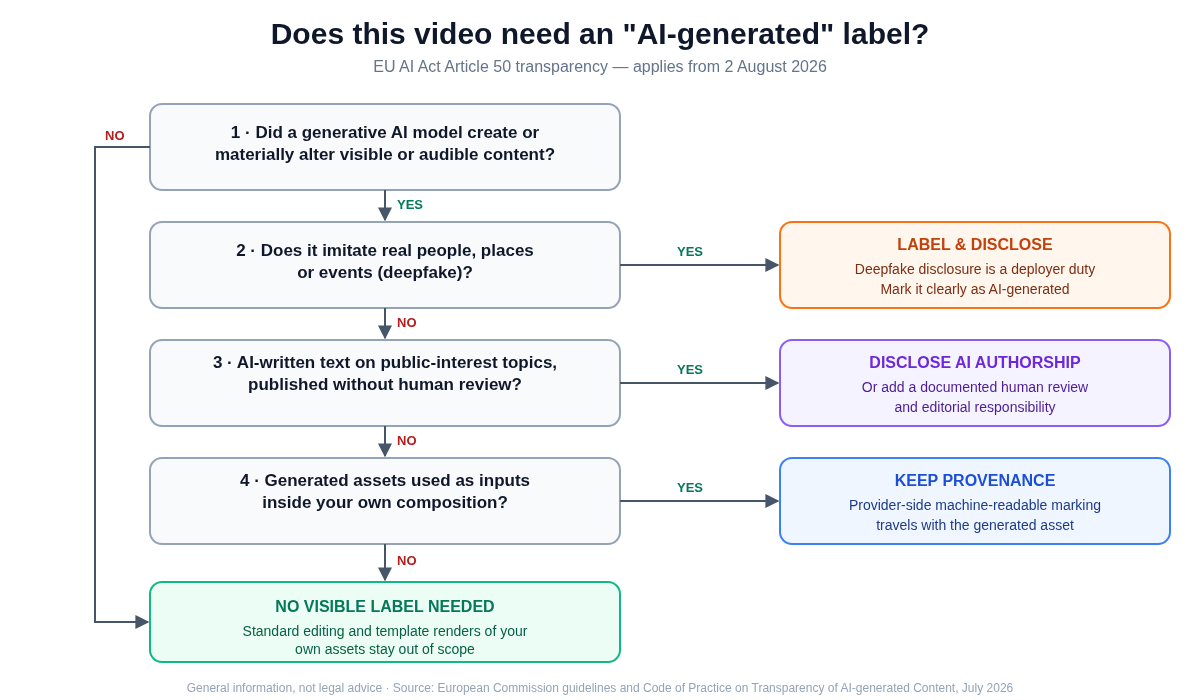
Figure 1: Does this video need a label? A four-step decision flow from generative model to labeling duty.
Deepfake means imitation, not animation
The Code of Practice describes a deepfake as image, audio or video that resembles existing persons, objects, places, entities or events and would falsely appear to a person to be authentic or truthful. The rule targets imitation: content that pretends to show something real that never happened.
A product video with animated price tags, a template-based birthday message with the recipient's name, or a real estate tour rendered from your own photos does not claim to be authentic documentary footage of an event. It is designed communication, and viewers understand it as such. Deepfake disclosure becomes relevant when a video imitates a real person, place or event, for example a cloned voice reading a script in a real politician's cadence or fabricated footage styled as news.
The standard-editing exception
The Commission's guidelines explicitly name standard editing as an example of an exception from the transparency obligations. In practice, that points to the core of everyday video production: trimming, colour correction, resizing, captions, layout fixes and re-rendering an existing design with new data do not turn content into artificially generated material.
This is where template-based workflows sit. You design a layout once, define which parts change (headline, price, image, name), and produce variants by rendering the same project with new inputs. Every output is a deterministic render of your own composition. Nothing in that pipeline synthesises new visible reality; the content is as human-authored as the design you approved.
Where AI does enter a video pipeline
The label question returns wherever generative models create or materially alter visible content:
- Generative stock material: clips, images or music from generative tools arrive with provider-side machine-readable marking. Keep that provenance in your project records.
- AI voiceover or avatars imitating real people: this is deepfake territory for deployers; disclose clearly.
- AI-written scripts or articles on public-interest topics: if published without human review or editorial responsibility, disclosure duties can apply. A documented human review step is the practical answer.
- Assisted editing: automatic captions, transcription or cut suggestions refine your own material and fall on the editing side of the line, not the synthesis side.
The pattern: AI as an input to your pipeline makes specific inputs traceable. AI does not reclassify your entire render as synthetic.
A practical checklist before you publish
- Did a generative model create or materially alter visible or audible content? Note the tool and date, and expect provider-side marking.
- Does the piece imitate real people, places or events? If yes, disclose it as such.
- Is AI-generated text on public-interest matters published without human review? Add review or disclose.
- Keep a short provenance record per project: which assets were generated, by which tool, and which were your own.
- For template renders, document that outputs are deterministic renders of an approved design with defined inputs.
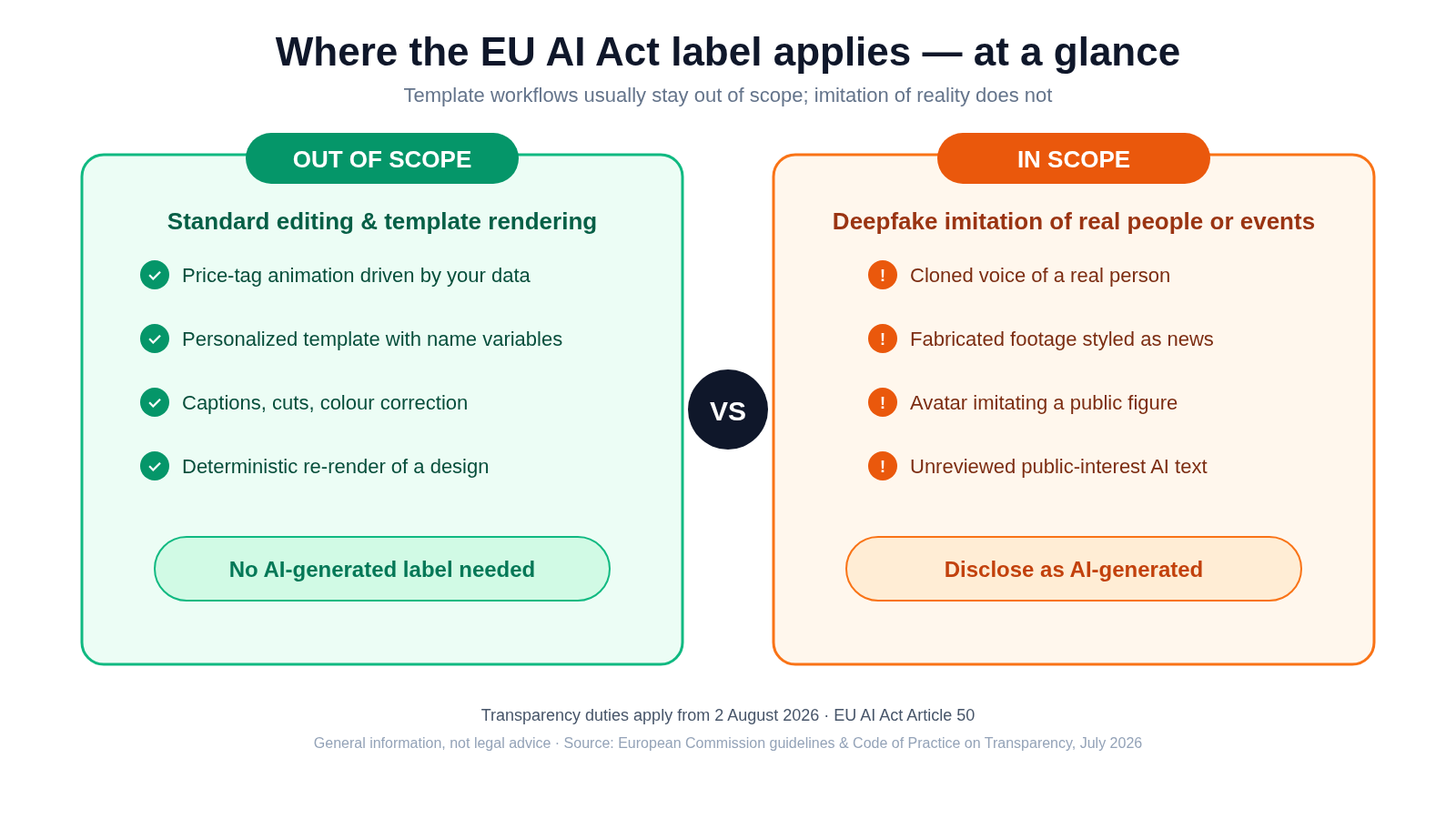
Figure 2: Standard editing and template rendering stay out of scope; imitations of real people, places or events are in scope.
Template production keeps the question simple
Platforms built for repeatable visuals make the distinction concrete. In personalized video at scale workflows, or when you keep AI video editing editable, the system renders your project with your data: layout, assets and variables are yours, and the render engine computes the output. Optional AI features such as media generation or voiceover are inputs you choose, and the marking question attaches to those inputs individually.
That is also the compliance-friendly position for marketing teams: one approved design, documented inputs, deterministic outputs, and a clear record of the few assets that were generated by a model. If a regulator or platform asks, the answer is a project history, not a guess.
FAQ
Do I have to label every video that used an AI tool somewhere?
No. The duty to mark generated content applies to providers of generative systems, and deployer duties focus on deepfakes and unreviewed public-interest text. Editing, captions and template rendering of your own assets are generally out of scope, with standard editing named as an example exception in the Commission guidelines.
What about AI voiceover?
A synthetic narrator voice is generated content whose provider marks the output at system level. If the voice imitates a real person, deepfake disclosure rules apply to you as deployer. State clearly when a voice is synthetic.
Is the Code of Practice mandatory?
No. The Code of Practice is voluntary, but the Commission and AI Board have confirmed it is an adequate tool to demonstrate compliance. By the end of July 2026 around 190 organisations had signed it; non-signatories must demonstrate compliance through alternative, equivalently adequate means.
Disclaimer – no legal advice (keine Rechtsberatung): This article is general information about the transparency obligations of Article 50 of the EU AI Act, based on the European Commission's guidelines and Code of Practice (retrieved 19 September 2026). It does not constitute legal advice and creates no attorney-client relationship. For a binding assessment of your specific case, consult a qualified lawyer or your legal counsel.